Today is November 2, 2026 /
Today is November 2, 2026 /

Shabbat Candlelighting This Week: 4:27pm | Shabbat Ends: 5:26m

Curator – Amy Levine Kennedy
WJC is proud to have the Rabbi Irving and Marly Koslowe Gallery of Jewish Art in our main lobby. This award-winning exhibition space is home to revolving exhibitions that reflect the Jewish world in microcosm.
Through fine art, mixed media, sculpture, and photography, our thematic shows are culled from contemporary artists, historical content, traveling exhibitions from other Jewish museums, and original curatorial work. The Gallery, in conjunction with other committees, brings in artists, historians, and performers for associated lectures and presentations, both in-person and virtually.
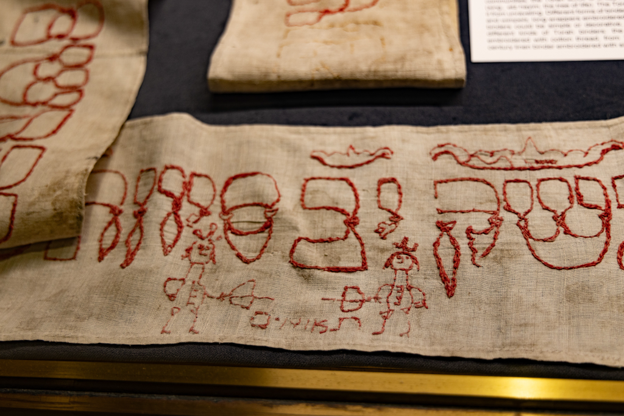
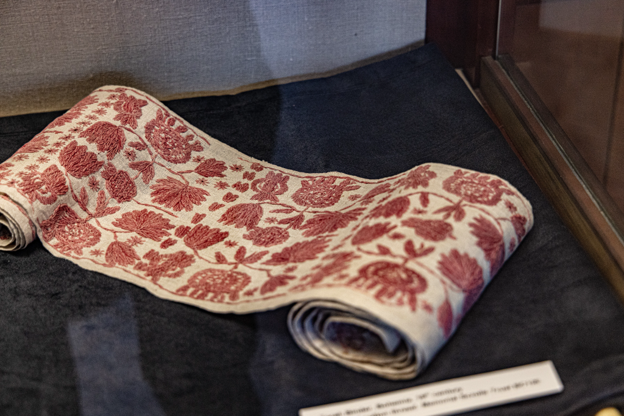
In 1964, the arrival in London of 1,564 rescued Torah scrolls via the Memorial Scrolls Trust included hundreds of Torah binders and wimpels. Hand-embroidered or painted with biographical inscriptions, these historic swaddling cloths, turned Torah binders of silk, linen, velvet, and leather, offer profound, tangible links to the Jewish families of Bohemia and Moravia. Making their U.S. debut, this collection represents one of the world’s largest of its kind. The rare wimpels are exhibited here alongside evocative photographs by Sheila Pallay. Documenting the Czech towns where these communities once thrived, Pallay’s work—featured in the book Light Beyond the Shadows, co-authored with genealogist Julius Müller—highlights both historical resilience and the resurgence of Czech Jewish identity.
— Amy Levine-Kennedy, Curator
 A Cut Above: Papercuts and Jewish Expression
Papercutting as a global art form originated in 4th century China after the invention of paper, where it was known as jianzhi. From there, the tradition spread along trade routes, influencing folk art in various cultures, including the vibrant papel picado of Mexico and the intricate decorative practices of African silhouettes (revitalized in contemporary times by the activist artist Kara Walker). In Europe, the earliest mention of a Jewish artist creating papercuts dates to the 1300s in Spain, when Rabbi Shem-Tov ben Yitzhak ben Ardutiel found his ink too frozen to write with and resorted to cutting letters out of paper, as was fashionable in Spain at the time. But the practice truly flourished in Jewish communities in Central and Eastern Europe starting in the 17th century. These papercuts served religious and ceremonial purposes, such as decorating homes for holidays or creating ornate marriage contracts —ketubot — in keeping with the idea of hiddur mitzvah or beautifying a jewish ritual or practice. The art form’s popularity waned in the early 1900s due to assimilation and the devastating loss of artists and work during the Holocaust. It was not until the 1960s that a revival took place, with artists in Israel and the United States, such as Yehudit Shadur, her student Yael Seidemann, the artists Greta Kessler and now Deborah Ugoretz, Greta’s son Alex Kessler, and Yehudit’s daughter Tamar Shadur (in textile), rediscovering and revitalizing the tradition, bringing this rich heritage to a new generation.

Our current exhibit features artist Siona Benjamin, whose art is a vibrant exploration of identity that reflects her experiences as a Jewish-Indian-American. Her work, a fusion of Eastern and Western aesthetics, illuminates the complexities of belonging. Born in Mumbai and raised in a diverse religious landscape, she navigates cultural currents, a journey mirrored in her art. Her signature blue-skinned figures symbolize “otherness,” representing her experience as an Jewish immigrant woman of color. The blue, drawing from Hindu deities, embodies both belonging and alienation, a feeling many share. Benjamin’s art gives a visual language to multifaceted stories, using humor and irony to articulate complex identities. She invites viewers to embrace the “in-between” spaces, challenging stereotypes and celebrating cultural blending. Her art acts as a catalyst for critical thinking, encouraging exploration of personal narratives and the use of art for connection and social change. It’s a powerful reminder that diverse stories, in their intricate beauty, are significant.
 Zev Engelmayer’s postcard project is a poignant and visceral response to the harrowing events of October 7, 2023, in Israel. The artist, known for his ability to transform everyday objects into powerful statements, has utilized the humble postcard as a canvas for hope, tribute, and, at times, memorial. Each postcard is a miniature altar, adorned with brightly illustrated images, symbols, and text that collectively weave a tapestry of resilience and hope. Engelmayer’s mastery of color and composition transforms the mundane into the extraordinary, as he imbues each postcard with a profound sense of intimacy and vibrant empathy.
Engelmayer’s postcards are not merely artistic expressions but acts of resistance. By creating these ephemeral yet enduring works, he refuses to allow the hostages to fade into obscurity. The project serves as a powerful reminder of the human cost of conflict and a call for compassion and solidarity. Engelmayer’s postcards are more than just images; each includes a narrative testimony, bearing witness to a tragedy that continues to reverberate through the global collective consciousness.
The collection runs in the Koslowe Gallery until January 21, 2025.
View the interview with the artist:
 “Crossroads & Connections: the National Library of Israel.”
As Israel faces ongoing conflict both within Gaza, the West Bank, and at its borders, the newly built library offers us historical perspective on this great land and its peoples. The exhibition represents 1,000 years of diverse cultural connections: art, music, poetry, and writings that tell the story of Israel. Images from four main collections in the library’s vast holdings, Israel, Judaica, Islam, and the Middle East, as well as their accompanying stories, reflect the diversity of cultural and religious life and thought in the region. Currently, the NLI serves as the central repository for projects documenting the events of October 7 and the ensuing war. We plan to host a program surrounding the exhibition in March.
David Leopold, the director of the Al Hirschfeld Foundation will speak about Hirschfeld’s many decades drawing the stars.
The Koslowe Gallery’s new exhibition “Growing Up Jewish: Art & Storytelling,” features work by painter Jacqueline Kott-Wolle, based in Highland Park, IL. Her work reflects American life as many of us know it—a contemporary one, yet steeped in the traditions of Judaism that many of our forebears brought with them after the Holocaust. Kott-Wolle’s paintings and narratives playfully and vibrantly describe a world of family, tradition, and community in North America, a world sometimes informed by memories of life before the war and inspired in part by hardships faced during the war. The works include Jewish holiday and ritual observances; special moments at Hebrew school and summer camp; vacations with grandparents; as well as milestone celebrations marked by the artist’s family through the years. Paired with Kott-Wolle’s own narratives, the paintings, derived from family photo albums, invite us to explore the question: “What does it mean to be Jewish for past, present, and future generations in North America?”


Westchester Jewish Center welcomes your contribution to any of our listed funds.